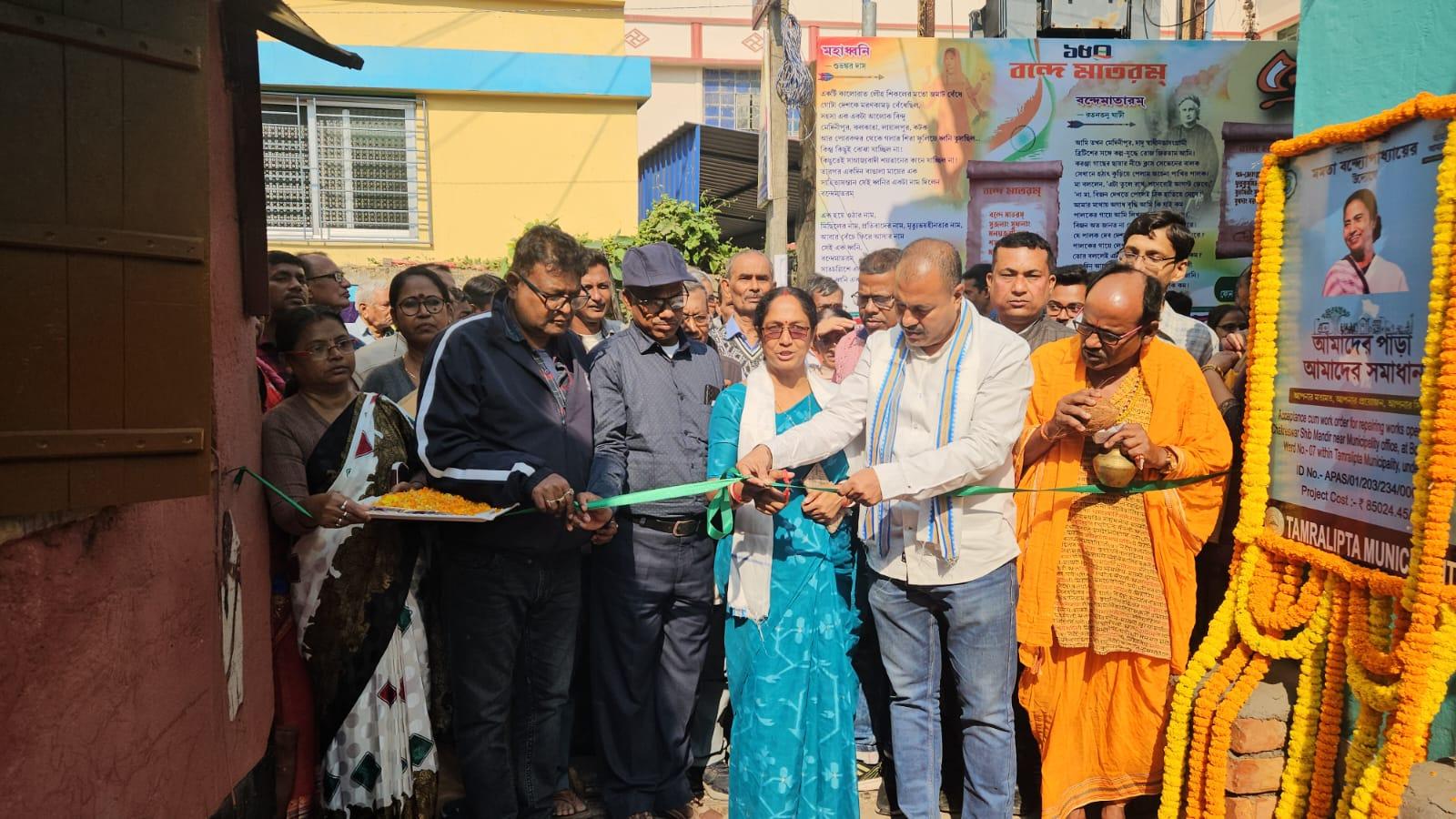
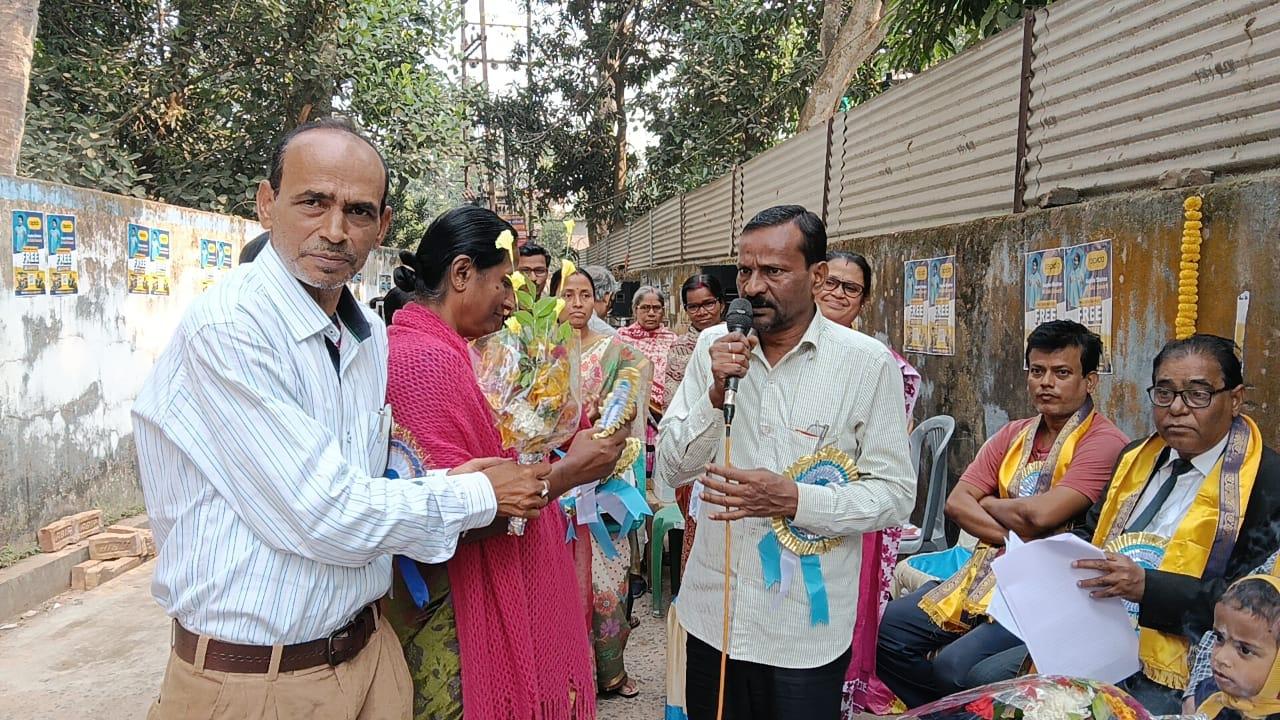
Tamluk, which is the ancient city of Tamralipta is located lower down the river Hooghly and sea
port, had been an important waterway for more than 3000 years. This ancient port city and
kingdom was bounded by the Bay of Bengal in the south, river Rupnarayana in the east and
Subarnarekha River in the west. The Rupnarayana is the joint flow of the river Dwarkeshwar and
the river Shilai. The Bay of Bengal and these great rivers and their numerous branches created a
prosperous and easy water navigational system fostering commerce, culture and early contacts
with the people outside the region. At the same time, these rivers helped to develop the
agriculture in this region Archaeological remains show continuous settlement from about 3rd
century BC. It was known as Tramralipti (in the Purans and the Mahabharata) or Tamralipta (in
Mahabharata) or Tamalika (in historical documents) or Tamalitti (in foreigners' descriptions) or
Tamoluk (in the British Raj). It was a seaport, now buried under river silt. For this reason,
Tamluk has many ponds and lakes remaining today.
Tamluk (22� 22' N 87� 55' E) is the headquarter of East Medinapur district, West Bengal and is
situated at a distance of 100 kms from Kolkata connected by road. The nearest railway station is
Mecheda lying on Kolkata � Kharagpur route of the southeastern railway. Tamluk town is situated
on the bank of river Rupnarayan about 85 K.M. from Kolkata and about 50 K.M. from Haldia
connected with Railway and Roadway communication through N.H. - 41.Total area of the town about
17.86 K.M. The town expending in such way that it is very difficult to identify the Panchayat
area and the Municipal at the outskrit in all its sides even the tow towns will be physically
amalgamated very soon. As of the 2001 census of India, Tamluk had a population of 45,826. Males
constitute 52% of the population and females 48%. Tamluk has an average literacy rate of 77%,
higher than the national average of 59.5%: male literacy is 83%, and female literacy is 72%.
Tamluk, 11% of the population is under 6 years of age.
Art and culture
Tamluk is always praised for its reach cultural activities. There are lots of Arts schools,
Dance Schools and Drama groups. Tamluk which is also an important craft center is located just
85 km south-west of Kolkata. People of tamluk is sober, cultured and rich.
People of Tamluk
The region has its own distinct ethnic mix, stemming from successive migrations and invasions
from both the west, east, and especially from northern India after the Aryan invasion of India.
Its history shows the complex combination of indigenous, Buddhist, Jain, Hindu and Islamic
cultures, often introduced through physical conquest and political control, as well as through
trade, travel, and migration. Unlike other parts of Bengal, Tamluk was always well connected
with the Gangetic plains. In fact, there is evidence to suggest that the culture of Aryavarta
influenced life in early Tamluk. The worship of Bheema is a sign of the socio-religious
acceptance of Aryan culture in this area. Even in the recent past, Tamluk was divided into many
areas based on caste and occupation, such as "Malakar Para" (Flower traders), "Adhikary Para"
(Brahmins), "Dey Para" (Gold traders), and "Mathore Para" (Sweeper's colony)..
Religion : Buddhist Tirtha
During Fa-Hien's visit to Bengal, Fa-hien is said to have travelled eastward along the course of
the Ganges river, and during his journey, he came across Buddhist stupas and monks at several
places. In Tamluk/Tamralipti Fa-hien had spent two years, and visited twenty-two monasteries,
inhabited by monks in Tamluk. Since Bengal was adjacent to Magadha, it is possible that the
Buddha had visited parts of Bangladesh as suggested by Hiuen Tsang, who noted that Asoka had
erected stupas at various places in Bengal and Orissa including the Port City Of Tamluk to
commemorate these visits. Asoka's Reign and the Post-Maurya Period epigraphic and other sources
reveal that Buddhism had established a powerful footing in Bengal during Asoka's reign. The
discovery of a Mauryan inscription in Brahmi characters at mahasthan in the district of bogra
bearing the name Pudanagala (Pundranagara) and the recovery of many Mauryan coins and other
artifacts dating from the fourth and third centuries BC suggest that the Gangetic delta was
under the control of the Mauryan empire. The Chinese traveller, I-tsing, is said to have noticed
Asoka's stupas near tamralipti (Tamluk). In southern Bengal from the time of Asoka to the Pala
period, both the Hinayana and Mahayana, not the tantric, forms of Buddhism were practised. But a
mystic form of Buddhism developed in Bengal during the Pala period and its profound impact
entirely changed the course and history of Buddhism. This medieval Buddhist movement was founded
by the tantric acharyas known as Siddhas who are traditionally believed to be men of psychic and
supernatural powers. Buddhism, as a typical tantric form of mysticism, reached a stage in Bengal
in the hands of the Siddhas where it was easily assimilated to Shaktism. The fusion between
Saktism and Buddhist mysticism gave rise to new schools of Saktism and some forms of popular
religion in which Buddhism is said to have survived, despite its decline in the face of
Brahmanism. Tamluk was also an eye-witness of these historical changes of Buddhism. Once the
famous Buddhist Tantric Devi Tara or Ugratara, who used to be worshiped in a Buddhist Vihar in
Tamluk, started to be recognised as Hindu Devi Kali named as Barghobhima. The temple of Devi
barghobhima is built on the site of a Buddhist vihara. Tamluk, the famous Buddhist Religious and
Academic centre of South East Bengal and Eastern India gradually became a centre of Sanatan
Shakti Peeth.
Sanatan Shakti Peeth
It is an important pilgrim place of the Hindus and one of the 51 sacred places of Shakti Peeth
where left ankle of Sati/Parvati fell. The temple's presiding deity is known as Shri Barghobhima
Devi. " Bivasete Bam Gulfa Felila keshab / Bhima Rupa Debi tate Kapali Bhairav" - Annadamongal
by Bharatchandra Rai. " Tamoluker Barghabhima Raikhan-r Kali" - Dharomongal by Manikram. "
Gokule Gomatinama / Tamralipte Barghobhima / Uttare Bidita Bishwakaya " Chandimongal by
Mukundaram Chakrovorty.
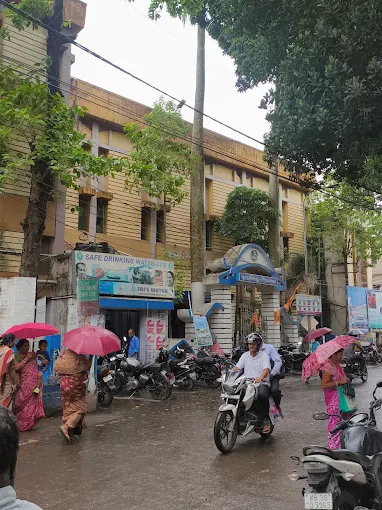
Tamluk was once a major Buddhist centre. Chinese pilgrims like Fa-Hien and I-tsing described
monasteries and stupas here. During Ashoka’s reign, Buddhism gained a strong foothold. Over
time, tantric Buddhism merged with Shaktism, transforming the Buddhist deity Tara into Devi
Barghobhima. Today, Tamluk stands as a revered Shakti Peeth where the left ankle of Sati is
believed to have fallen.
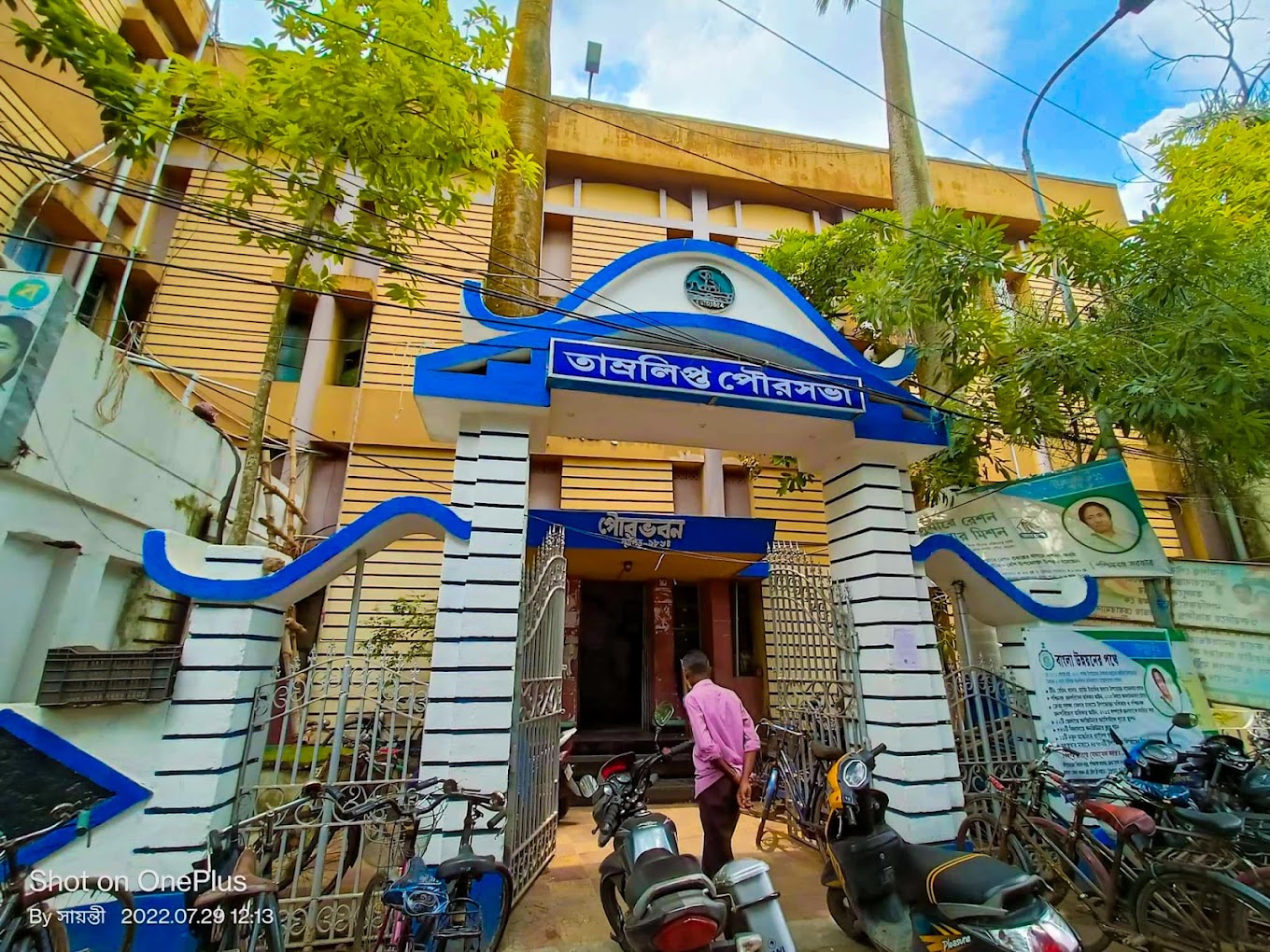
The vision of Tamluk Municipality is to develop an economically self-sufficient, environmentally
clean, and culturally vibrant urban centre. Planned initiatives include water treatment plants,
improved drainage and sewerage systems, modern roads, solid waste management, healthcare
expansion, educational development, employment generation, cultural preservation, and
sustainable urban growth over the next 5–20 years.
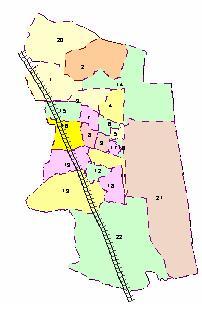
Area: 17.86 Sq. Km
Total Wards: 20
Ward Committees: 20
Women Councillors: 10
Population (2001): 59,109
Water Supply: 40 Hand Tubewells, 11 Deep Wells, 56 km pipelines, 330 hydrants,
3060 house connections.
Public Health: Roads, sanitation, burning ghat, hospital, dispensaries,
cremation & trenching grounds.
Tamluk is the headquarters of East Medinipur district, located about 100 km from Kolkata. The
nearest railway station is Mecheda on the Kolkata–Kharagpur route. Situated on the Rupnarayan
River, the town is well connected to Haldia by NH-41 and continues to expand, gradually merging
municipal and panchayat areas.